
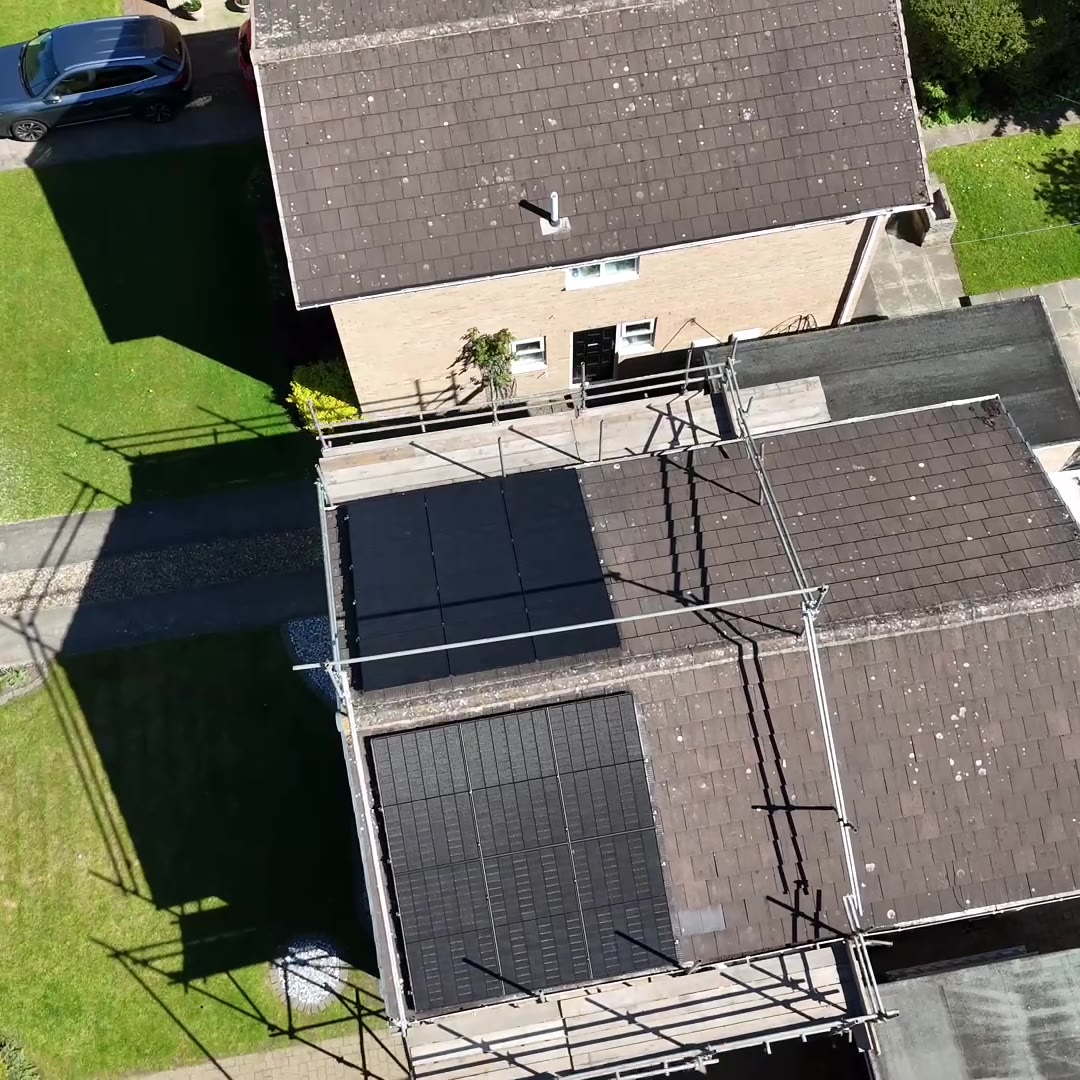
Most UK homes need between 6 and 16 solar panels. A typical 3 or 4-bedroom house? You’re looking at 10–12 panels. Every home’s different, but working out the right number for yours is easier than you’d think.
I’ll walk you through the key factors so you’ve got a realistic idea before you speak to anyone.
It Comes Down to How Much Electricity You Use
This is the big one. The average UK household uses roughly 3,500 kWh of electricity per year. A standard solar panel in the UK produces around 250–350 watts and generates approximately 250–300 kWh over a full year.
Quick bit of maths: divide your annual usage by 300 and you get a working estimate. For 3,500 kWh that’s roughly 11 or 12 panels.
If your home uses more, maybe because you work from home, run an electric vehicle, or you’re on electric heating, you’ll want a few more panels to make a real difference to your bills.
You can find your annual usage on your electricity bill or your smart meter app. It’s usually shown in kWh per year, often near your direct debit amount.
Which Direction Does Your Roof Face?
South-facing is the gold standard for solar in the UK, absorbing the most sunlight throughout the day. East or west-facing roofs still perform well. You’ll typically see around 15–20% less output compared with south-facing, but still enough to deliver solid savings.
North-facing roofs aren’t suitable on their own. But many homes have a combination of roof sections facing different directions, which gives an installer plenty to work with. We see this a lot, and it’s rarely a dealbreaker.
Roof pitch matters too. The sweet spot in the UK is between 30 and 40 degrees, which is close to the angle of most standard pitched roofs. So your roof’s probably already close to ideal.
What Size Systems Do People Actually Go For?
The most popular domestic solar installations are between 3kWp and 5kWp (kilowatt peak). A 3.5kWp system uses around 10 panels and suits a 3-bedroom home well. A 4kWp system (around 12–13 panels) is a great fit for larger households or anyone with higher energy use.
Add a battery storage unit and you can store surplus electricity generated during the day, then use it in the evening. That stretches your savings further and cuts your evening reliance on the grid.
Do You Need to Cover 100% of Your Electricity?
No. And this is worth knowing before you go any further.
You don’t need enough panels to cover every kilowatt-hour you use. Even a system that covers 40–60% of your annual consumption will make a noticeable dent in your energy bills.
Honestly, most homeowners are better off choosing a well-sized system rather than the largest possible one. Keep upfront costs sensible, still enjoy years of lower bills. Any surplus electricity you generate can be exported to the grid under the Smart Export Guarantee (SEG), which pays you a small rate per unit sent back.
The right number of panels is the one that balances your budget, your roof, and your energy goals. A good installer will help you find that balance.
Want to Know What Your Home Actually Needs?
The most reliable way to get a proper answer is a professional roof survey and energy assessment. An installer will look at your actual consumption, assess your roof, and recommend a system that works for your specific situation.
We carry out free, no-obligation home assessments across the UK. We’ll give you an honest, clear recommendation. No jargon, no upselling, just the right system for your home.
Give us a shout at amprenewables.co.uk to book your free home solar assessment.