
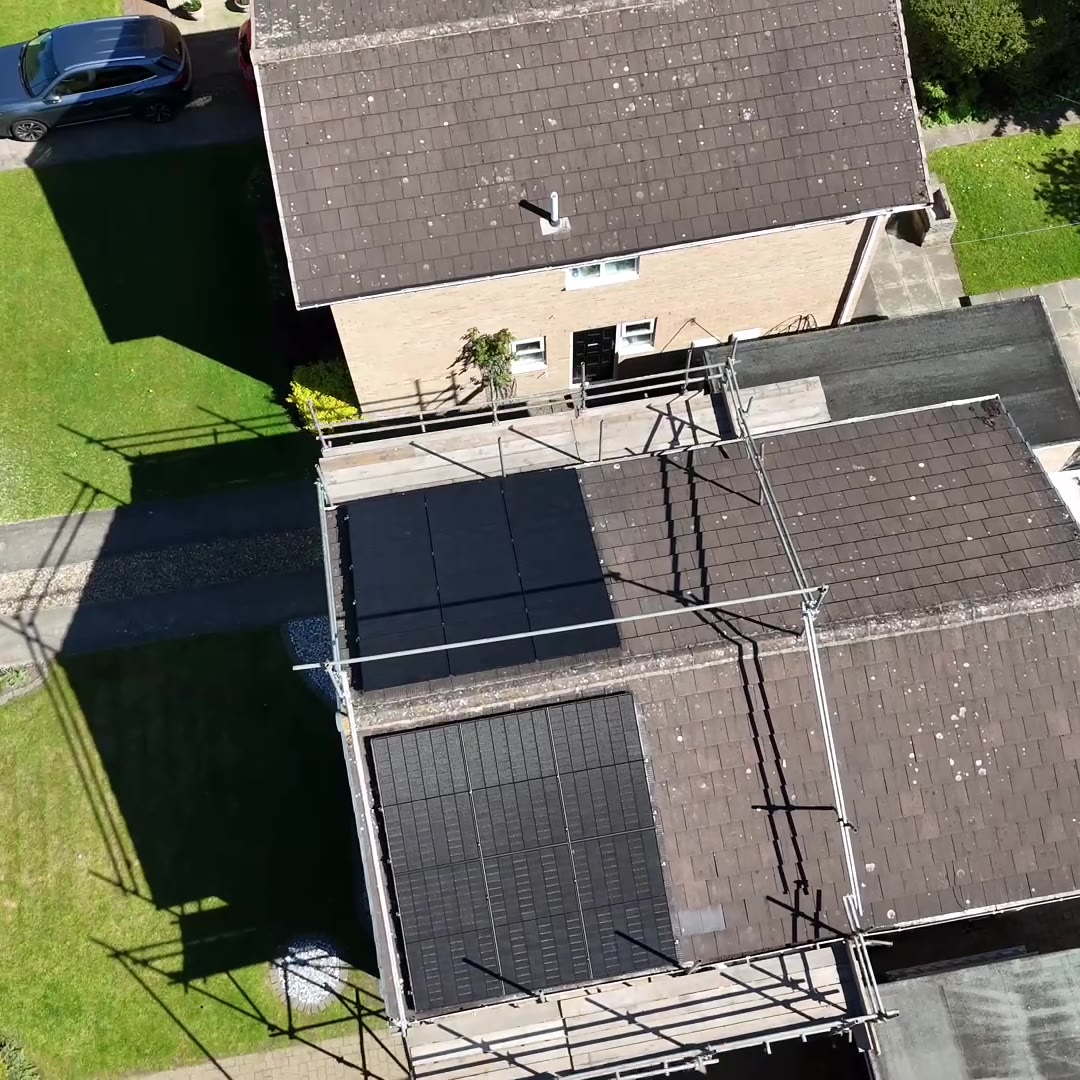
Partly, yes. Sometimes entirely.
A 10-panel (3.5kWp) solar system can generate as much electricity as the average UK home uses in a year. But the timing of that generation means you’ll still draw from the grid at certain times, particularly in the evenings and on overcast winter days.
Here’s a realistic look at what 10 panels can and can’t do, so you can decide whether it’s the right fit for your home.
What 10 Panels Actually Produce
A well-sited 10-panel system will generate approximately 3,000–3,500 kWh of electricity per year. The average UK household uses around 3,500 kWh annually. So the numbers line up pretty well.
In summer, on a bright day, 10 panels can easily generate 20–30 kWh. That’s more than most homes use in a full day. Your panels are powering the house and then some, with the surplus going back to the grid.
Winter’s a different story. Shorter days and lower sun angles mean daily generation of 3–8 kWh is more typical, which covers a smaller portion of what you’re using.
The Timing Problem
The total amount of electricity isn’t really the issue. It’s when it’s generated.
Solar panels produce during daylight hours. But a household’s peak consumption often falls in the morning before the sun’s up, and in the evening after it’s set. So even if your panels generate enough total electricity across the year, you’ll still be buying from the grid at peak times unless you’ve got a battery.
The proportion of solar electricity you actually use directly (rather than export) is called your “self-consumption rate”. Without a battery, this is typically 30–50% for a working household. With a battery, it can rise to 70–90%.
We see this a lot. People are surprised that their panels are generating plenty of power, but they’re not home to use it.
Add a Battery and Everything Changes
A home battery stores the surplus electricity your panels generate during the day and makes it available in the evening. For many households, this is the upgrade that takes solar from “useful” to “properly powerful”.
With a well-sized battery alongside your 10 panels, you could cover 70–90% of your total annual electricity consumption from solar. On good summer days, you can go entirely grid-free.
Battery costs have fallen considerably and continue to drop. Many homeowners install them at the same time as their panels to keep installation costs down.
Shift Your Usage, Save More
Even without a battery, you can increase the proportion of solar electricity you use by shifting some high-consumption activities to the middle of the day. Run your washing machine, dishwasher, and tumble dryer between 10am and 3pm, when solar generation is at its peak. Those appliances then run on free electricity rather than grid power.
It’s a small change to your routine. But honestly, it makes a noticeable difference to your bills without spending a penny on extra hardware.
Want to know whether 10 panels, with or without a battery, is the right setup for your home? We offer free assessments at amprenewables.co.uk.