
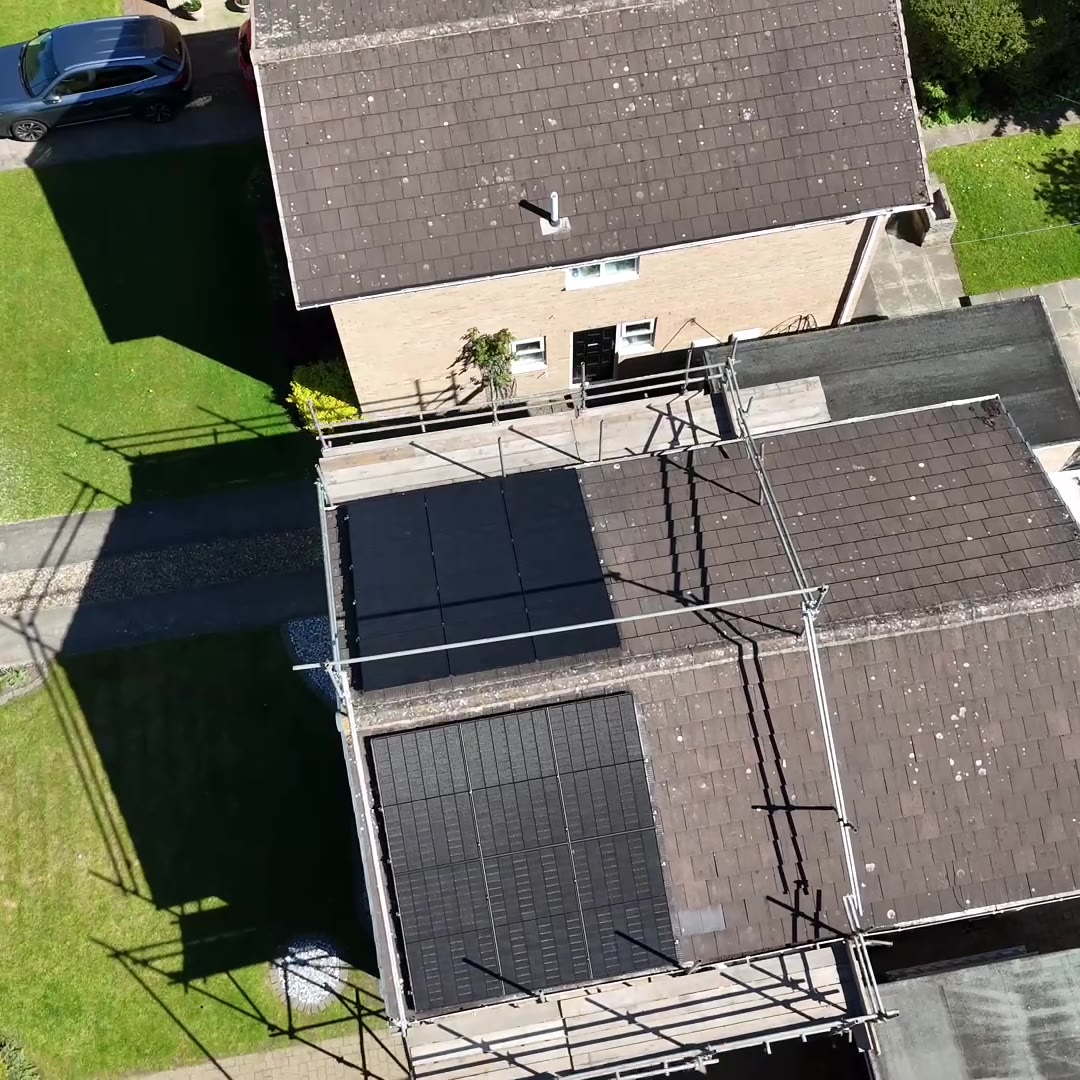
Short answer: for most UK 3 to 4-bedroom homes, yes. Ten panels is probably the most common system size we install, and there’s a reason for that. It delivers strong savings without needing a massive roof or a massive budget.
Here’s what 10 panels will actually do for you.
What Does a 10-Panel System Generate?
Ten standard panels give you a system of around 3.5kWp (kilowatt peak). In the UK, a south-facing 3.5kWp system typically generates between 3,000 and 3,500 kWh of electricity per year.
The average UK household uses about 3,500 kWh per year. So on paper, 10 panels can generate roughly as much electricity as your home consumes annually. That surprises a lot of people.
Now, there’s a catch. Solar panels generate during the day, but a lot of your usage happens in the evenings and early mornings. Without battery storage, you’ll still draw from the grid at those times. During daylight hours though, your panels will cover much or all of what you use. Anything surplus gets exported to the grid under the Smart Export Guarantee (SEG), earning you a small income.
We see this pattern constantly. Customers are surprised how much they’re generating during the day, and then adding a battery later pushes things even further.
How Much Could You Save?
With a 10-panel system and sensible usage habits (running the dishwasher and washing machine during the day, for example) many UK households save between £600 and £900 per year on their electricity bills.
Over the typical 25-year lifespan of the panels, that adds up to £15,000–£22,000 in savings. The typical installation cost is £4,500–£6,000, so the payback period usually sits between 6 and 9 years.
Add a battery and you can store surplus daytime generation for the evening. That pushes your annual savings higher still.
What If You Use More Than Average?
Bigger household, working from home, driving an electric vehicle, or just using a lot of electricity? Ten panels may cover a smaller proportion of your needs, perhaps 40–60% rather than 80–100%.
That’s still a big reduction in your bills and your carbon footprint. And if you want to cover more, adding a few extra panels (going to 13 or 16) is straightforward in most cases.
Honestly, the right approach is to look at your actual annual consumption and design the system around that figure. Don’t just default to a round number like 10. It should be based on your usage, your roof, and what makes financial sense.
How Much Roof Space Do You Need?
Ten standard panels require approximately 17–20 square metres of usable roof space. A standard semi-detached or detached 3-bedroom home typically has more than enough south-facing roof for this.
Skylights, chimney stacks, partial shading? Your installer will work around these to maximise the number of panels that can be fitted effectively. We do this all the time. It’s rarely a problem.
Wondering if 10 panels is right for your home? We’ll assess your roof and energy use for free, no obligation. Give us a shout at amprenewables.co.uk.